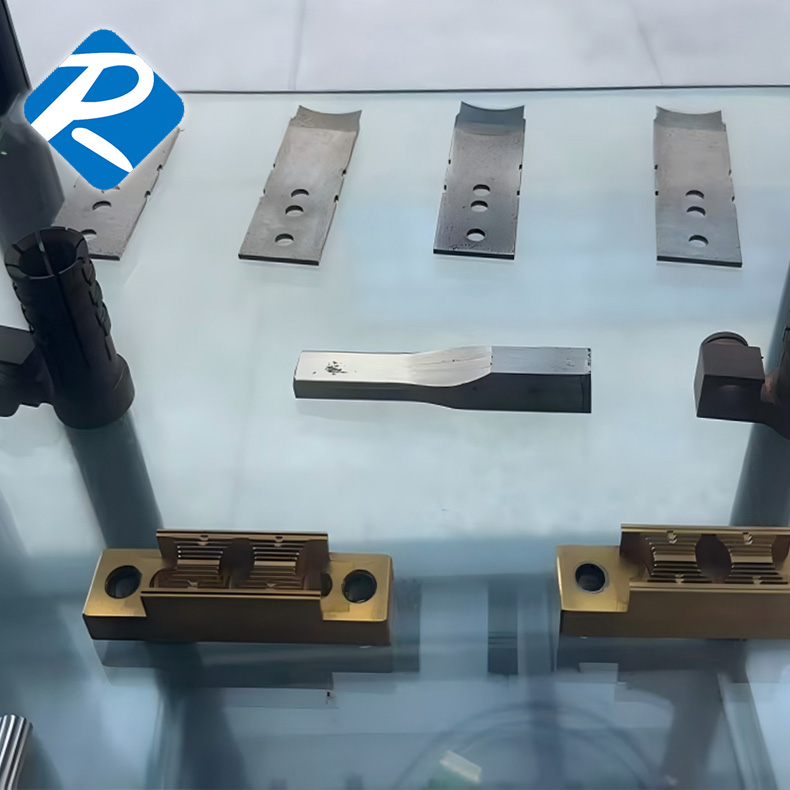
The metal components shown in the picture are typical representatives of precision metal parts. The long connected carrier strip holds multiple assembled stamping parts, matched with deep‑drawn cylindrical shells and special‑shaped cover plates with positioning lugs and perforated areas. These finished pieces are produced through continuous die stamping, deep drawing, bending and forming processes. Unlike ordinary rough metal hardware, every hole position, bending angle and wall thickness is strictly controlled within tiny tolerance ranges. Such sophisticated workmanship is exactly what clients seek when purchasing custom stamping services.
In the past, many small‑and‑medium hardware manufacturers could only deliver standard stamping parts with fixed specifications. Once customers had non‑standard structural demands, they would face obstacles such as long development cycles, unstable product quality and high mould costs. Today’s advanced custom stamping services effectively resolve these pain points. Suppliers can conduct structural simulation, mould design and process optimization according to clients’ drawings, samples or functional requirements. Whether it is continuous‑strip multi‑cavity stamping components, deep‑drawn thin‑wall metal cups or special‑shaped cover parts with mounting tabs, they can be manufactured as qualified precision metal parts.
Batch production consistency is a major challenge for stamping parts. Thin‑wall metal material is prone to warping, dimensional deviation and surface scratches during high‑speed stamping. For these precision metal parts applied in core assemblies, even tiny dimensional errors will cause assembly failure or shorten the whole equipment’s service life. Reliable custom stamping services run strict quality control throughout the whole workflow: raw‑material incoming inspection, mould trial‑out adjustment, first‑piece confirmation, in‑process sampling inspection and finished‑product full‑size testing. This complete set of procedures guarantees that thousands of stamping parts maintain uniform performance.
Industry analysts point out that downstream industries are transforming from mass standardized procurement to differentiated ordering. More buyers no longer choose off‑the‑shelf hardware directly. Instead, they look for partners offering custom stamping services to develop exclusive precision metal parts matching their product positioning. The integrated stamping‑strip assembly displayed perfectly illustrates this trend. The connected carrier strip structure facilitates automatic assembly on clients’ production lines, lowers manual operation errors and improves overall production efficiency.
As global manufacturing competition intensifies, the market competition of stamping parts is no longer only about price. Capabilities covering custom development, high‑precision forming and stable mass delivery have become core evaluation indicators. Suppliers with mature custom stamping services will occupy more market share in the precision metal parts track. Looking forward, as new‑energy equipment, intelligent home appliances and other industries keep growing, higher‑level requirements will be put forward for metal stamping technology, pushing the whole industry to keep optimizing processing techniques and quality‑management systems.